
Table of Contents
Introduction:
The Importance of Urea Sprays
Post-harvest urea application has become a vital practice for apple growers across the Kashmir valley. When properly managed, it helps produce the high-quality fruit necessary to turn even a small, one-acre orchard into a highly profitable livelihood.
Clarifying the Confusion
Despite its importance, there is still widespread confusion regarding the correct purpose, dosage, and timing of these sprays—often because past guides were far too technical. This article breaks down everything you need to know in simple, easy-to-understand language, ensuring you can apply urea effectively to get the maximum benefit for your orchard.
Check out article on Apple Russeting: Important Causes and Management
Background of urea spray:
Management of diseases, especially scab and Alternaria leaf blotch (ALB) is the most difficult job for any commercial grower & it requires huge investments to produce disease free apples anywhere in world, especially under the climatic conditions with frequent rainfall combined with relatively cooler temperatures (around 20°C). Due to heavy pesticide use in apple, J&K tops the of states/UTs in per hectare consumption of pesticides. There is more than Rs.450 crore pesticide business in Kashmir valley and almost all of these pesticides are used to manage apple diseases and pests.

In countries with frequents rains during apple season like in Europe, growers are required to spray more than 20 fungicides to keep diseases especially scab away from the orchards. Even this year in 2021, many of our growers sprayed around 12 fungicides as there were more rain events in spring and summer months. It is hard reality that without fungicides, we can’t produce disease free apples, even in organic apple production system some fungicides like copper, sulphur, lime sulphur, bicarbonate salts etc., have been permitted to manage diseases like scab and ALB.
However, growers can’t rely only on fungicides to manage disease problems, rather some practices like orchard sanitation, canopy & soil fertility management have a vital role to decrease disease (inoculum) availability and disfavour disease development. During winters, disease like scab caused by a fungus (Venturia inaequalis) doesn’t only survive on fallen leaves, rather it also undergoes through sexual reproduction so as to ultimately produce ascospores exactly around green tip stage of apple for causing the first infection (Primary infection) during Mid-March.
Purpose of urea spray:
As we know, apple diseases especially scab and ALB (Alternaria may possibly survive on trees also) overwinters on fallen leaves, so removing leaves from orchards is extremely important to reduce disease prospects during next year. Now the question is whether it is possible for every grower to remove the leaves manually (we don’t have tractor drawn mower/shredder available in valley and in most of the case at this time we may be unable to use such machines in traditional orchard system) and the answer is NO, as due to various reasons every grower is not able to remove the leaves from his orchard.
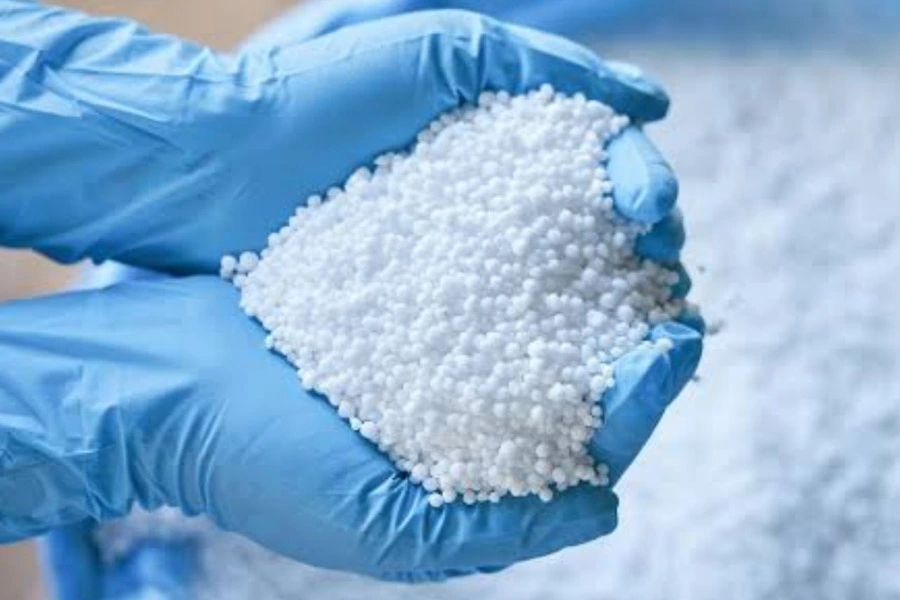
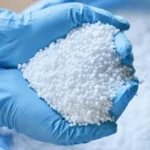
So do we have any other option left behind to destroy the diseases (inoculum) that survives in fallen leaves? Of course, we do have at least two options in traditional orchard system and one option in High Density planting system. Spraying urea on trees just before leaf fall or on leaf litter present on orchard floor in November or March, is a practice recommended all over the world for management of apple diseases. Urea; a good source of nitrogen (46%) is not preferred just because it is cheap, but also because it is readily absorbed by leaves of almost all plants at any time.
While nitrogen is typically used as a nutrient for plant growth, applying urea in the fall serves a different purpose: decreasing the Carbon-to-Nitrogen (C:N) ratio in fallen leaves. This added nitrogen accelerates microbial decomposition during the winter, effectively destroying scab inoculum. Research shows this practice can reduce scab by 50% to 96%.
Moreover, urea at 5% or little lesser has another advantage, that it turn toxic to the disease propagules like scab Venturia which overwinters in leaves. The other option, I was talking with traditional system is to go for sheep grazing. Sheep may not only eat leaves carrying diseases, they will add lot of organic manure required by trees for producing high quality apples and will also disturb the movement of rodents, probably may force them to go out of the grazing orchard lands.
Secondary Benefits of urea spraying:
We must understand that postharvest application of urea is basically aimed to manage apple diseases, so the dose and time of application is very important. There are certainly some secondary benefits out of urea spraying directly on tree foliage & the benefits are clearly visible to the growers. When trees are deficient in nitrogen, urea application enriches them with nitrogen which helps in many ways especially in next year’s fruit set and quality. Moreover, the superficial fungal moulds growing on stems and branches are cleared with the spray & trees turn very clean good looking to the growers.
Dosage of Urea Spray:
There is a lot of confusion regarding the dosage of urea spray among our growers. Unlike farmers in most other countries who spray a definite, calculated quantity of both agrochemicals and water, this practice is largely missing in the valley. Due to a lack of advanced spraying technology and the layout of our traditional orchards, a huge amount of agrochemicals is unfortunately wasted during application.
Because of this inefficiency, our apple trees often receive ten times more agrochemicals than trees elsewhere, which is why we must be incredibly careful with dosages. While spraying a 5% urea concentration (5 kg per 100 liters of water) on orchard floor leaf litter is economical and effective, spraying it directly on the trees carries risks. We have observed several instances in South Kashmir where a 5% spray turned toxic, damaging buds and ruining the next year’s crop, even though controlled trials at AARC Shopian showed no such damage.
This difference in bud damage (phytotoxicity) actually depends on the existing nitrogen status of the plants. Trees that already have high nitrogen levels are much more likely to be damaged by a 5% urea application. Since it is not practical for every grower to conduct leaf testing to determine these levels, SKUAST-K Shalimar updated its guidelines last year to recommend a safer 3-4% concentration for Kashmir apple growers.
As a practical rule, if your orchard has a lot of vegetative growth—which indicates high nitrogen levels in the plants—you should prefer a 3% spray. Otherwise, a 4% concentration is perfectly safe. Growers should simply keep in mind that while these lower concentrations protect the buds, they may not be quite as highly effective as a full 5% spray.
Is Nitrogen a defoliant?
Although, urea is basically being recommended to reduce disease inoculum and save few fungicidal application during next season, however, many people in valley believe that urea application is there to shed leaves early, so they try to apply urea just after harvesting of apples in October, as they fare damages due to early snowfall . There are very few studies wherein urea in some crops at lower doses in combination with some defoliants like chelated copper (CuEDTA) or Zinc Sulphate has been reported to promote defoliation. However, individual application never promotes any defoliation in apple, rather it may further prolong the growth period if sprayed early in October.
Timing of urea spray:
There is lot confusion among the growers about the timing of urea application. Since many growers believe urea at higher concentration defoliates leaves, so they start spraying urea just after fruit harvesting. We have often observed that urea application in early or mid-October promotes further growth and also delays hardening in plants. The best time to spray urea is just before natural leaf fall in early November. Growers must remember that there is huge amount of nutrients in leaves and these nutrients are naturally translocated to trees before leaf fall. Urea can be applied on leaf litter present on orchard floor in spring also with better results, however, that will not give the secondary benefits of urea application.
Conclusion:
- Removal of fallen leaves or grazing sheep in traditional orchards or urea application helps to reduce diseases incidence during next year.
- Urea @ 3 to 4% (3 – 4 kg /100 litre water) should be applied just before natural leaf fall starts in apple.
- Urea can be also sprayed @5% (5 kg / 100 litre water) on leaf litter on orchard floor during Autumn in November or before bud break in March with good results
- Early spraying of urea can prolong growth period and may delay hardening in trees.
Author: Dr. Tariq Rasool Rather, Plant Pathologist, FOA, Wadura, SKUAST-K


Thanks
Very fruitful information for growers
I am thankful to both of you for providing future farmers a useful and good information.
Very nice information👍
Thanks for explaining in a simple way understandable to a common farmer.
A simple request sir,do visit Hajin Bandipora if possible.
Excellent information for growers .
Without information and guidelines none of grower can produce scab free apples.
Thanks a lot.
Thanks Dr sb for giving fruit growers a fruit full advise however you are aware our growers are illiterate please convey the dosage in common language I.e in how many grams in on teen(15 litre)
Dear posted on Facebook after your query
Is any other pesticide to mix with urea just like copper. Plz. Inform Dr Shab
Although not recommended by SKUAST-K, but after harvest you can spray
Thanks for sharing the information in simple and understandable way for common farmers of valley.
Very good information sir for controlling of pest and disease in dicidous fruit crops.